1874
James Duncan settles
James Duncan, an Aberdeen-born stonemason turned farmer, takes up the Prospect run at the foot of the Blackstone Hills. The first cottage is built from schist quarried out of Dunstan Creek.
Eight chapters from the Duncan family farm, between Becks and St Bathans, at the foot of the Blackstone Hills.
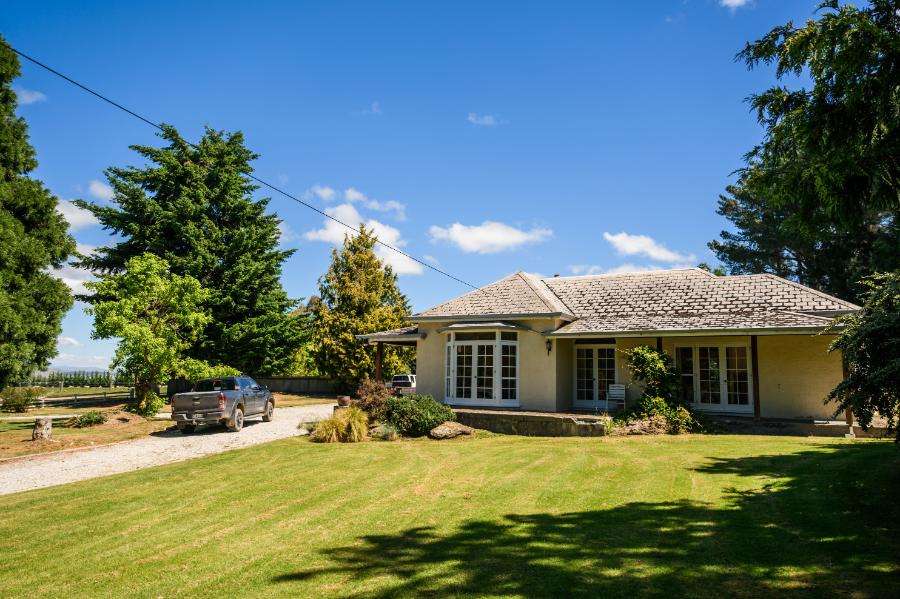
Plate i — Hopehill Farmhouse, c. 1923
James Duncan, an Aberdeen-born stonemason turned farmer, takes up the Prospect run at the foot of the Blackstone Hills. The first cottage is built from schist quarried out of Dunstan Creek.
A timber-and-corrugated grain shed is raised in a single weekend by neighbours from Becks, St Bathans and Cambrians. It still stands today, and now houses Paulette's flower studio.
Built by James's son Robert as a wedding present for his bride Margaret, the homestead is named for the rise it sits on — clear views to the Blackstones.
A foundation flock of fine-wool merinos is brought down from Mt Ida. The breed has stayed on the farm ever since.
Chip Duncan returns from agricultural college in Lincoln to run the farm with his father. Paulette joins a year later.
An old shepherd's hut is restored and re-sited above Dunstan Creek. The first guests arrive in September.
Paulette plants the first of three cut-flower beds behind the Grainshed. The studio takes its first wedding the following summer.
Chip and Paulette host the farm's 150th anniversary with neighbours, family, and the great-great-grandchildren of the original settlers.
'Prospect' was the name James Duncan gave to his run in 1874 — gold miners' shorthand for ground that looked promising. The farm has been called that ever since. The Grainshed is the 1898 building behind the homestead. Hopehill is the rise the farmhouse sits on. Becks is the nearest pub. St Bathans is the nearest gold-rush ghost town. They all matter.